

Society romanticises female pain and torment. Why?
Society has always had a certain obsession with women who are mentally tormented or in pain — we see this throughout history. Greek Mythology showcases doomed women such as Echo. Historians depict women like Cleopatra as suicidal. Literature namely The Virgin Suicides, A Streetcar Named Desire, Macbeth, and Gone Girl revolves around mentally unwell women. It’s featured in films such as Girl Interrupted, Black Swan, and A Woman Under The Influence. It’s presented in popular TV shows such as Skins and Fleabag. It’s also preyed upon in non-fictional settings by tabloids and paparazzi. For centuries there has been an obsession with female hysteria and the “sad girl” aesthetic. This obsession romanticises female mental illness, the idea of a knight in shining armour, and women’s pain.
Why is the idea of a tragic woman romanticised so much in society?
The Sad White Girl
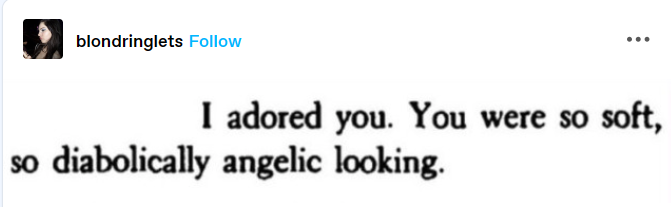
Female sadness and depression became something of an aesthetic. When Tumblr was at its height, the algorithm would push images of distressed women, making them appear beautiful. Notably, the image of Effy from Skins crying with makeup running down her face went viral and black and white pictures of crying girls smoking were particularly popular. This same “aesthetic” is still romanticised today on platforms such as TikTok.
Notably, Tumblr also pushed other detrimental images to teenage girls regarding eating disorders, self-harm, and drugs. This further pushed the idea that dealing with mental illness in these detrimental ways was not only okay but beautiful.
This obsession with a tragic woman; crying, smoking, and dark makeup running down her face, is a common trope in movies and literature. It has an underlying message of “she’s sad but beautiful”. Would being happy but unattractive be worse in this society?
This romanticisation of sad girls almost exclusively happens with white girls, however. Women of colour are not awarded the same grace when it comes to mental illness and sadness. Not only is their sadness not seen as beautiful but it is either overlooked or labelled as problematic.
Female Pain
How did society become so obsessed with women’s suffering that it has simply just become a trend? Even when platforming female pain and rage can be considered empowering, it always seems to be flipped and capitalised on, we saw this with the Me Too movement. Male suffering is not celebrated in this way.
Society has now been conditioned to associate female pain with beauty. This just perpetuates a cycle of romanticising suffering rather than acknowledging women’s resilience or addressing the underlying circumstances that cause this suffering.
Phoebe Waller-Bridge summarised it beautifully with; “Women are born with pain built in. It’s our physical destiny. Period pains, sore boobs, childbirth, you know. We carry it within ourselves throughout our lives. Men don’t. They have to seek it out. They invent all these gods and demons and things just so they can feel guilty about things, which is something we also do very well on our own. And then they create wars, so they can feel things and touch each other, and when there aren’t any wars they can play rugby. And we have it all going on in here, inside. We have pain on a cycle for years and years and years”.
Women’s pain isn’t just expected in life but romanticised. Perhaps, from a male lens, the vulnerability is what makes this so beautiful. From a female lens, possibly just seeing women not portrayed as perfect is what makes this so appealing to them.
Female Value Is Tied To Youth
I would argue that this obsession with the tragic woman originates from misogyny and the patriarchy. Women’s main assets are linked to their beauty and fertility; women have an expiration date. We are deemed undesirable and useless once we don’t serve the male gaze or fulfil our reproductive obligations. So, it’s better to die young and beautiful than to grow old.
Consider how anguished women such as Amy Winehouse and Marilyn Monroe were treated before and after their deaths. The patriarchal entertainment industry tormented these women, labelled them as unhinged when they cracked, and then idolised them once they died tragically young as a result.
Troubled women, dealing with addiction or mental problems are desired by the patriarchal society — they are tragically beautiful. The fate of these women falls under two outcomes: they need a knight in shining armour to save them or they tragically stay forever young and attractive — both of these bleak outcomes are much more palatable to the patriarchy than a mentally stable woman who is liberated from the shackles of the male gaze.
The “sad girl” aesthetic is a complicated phenomenon — something that can be dated back centuries. When used productively by writers such as Phoebe Waller-Bridge it can provide solace to women who are battling similar demons and hurdles. However, the commodification and romanticisation of women’s suffering and mental turmoil falls right into the patriarchy’s lap.
If you like my articles you can buy me a coffee so I can continue to keep researching and writing.
 English tutoring fused with journalism